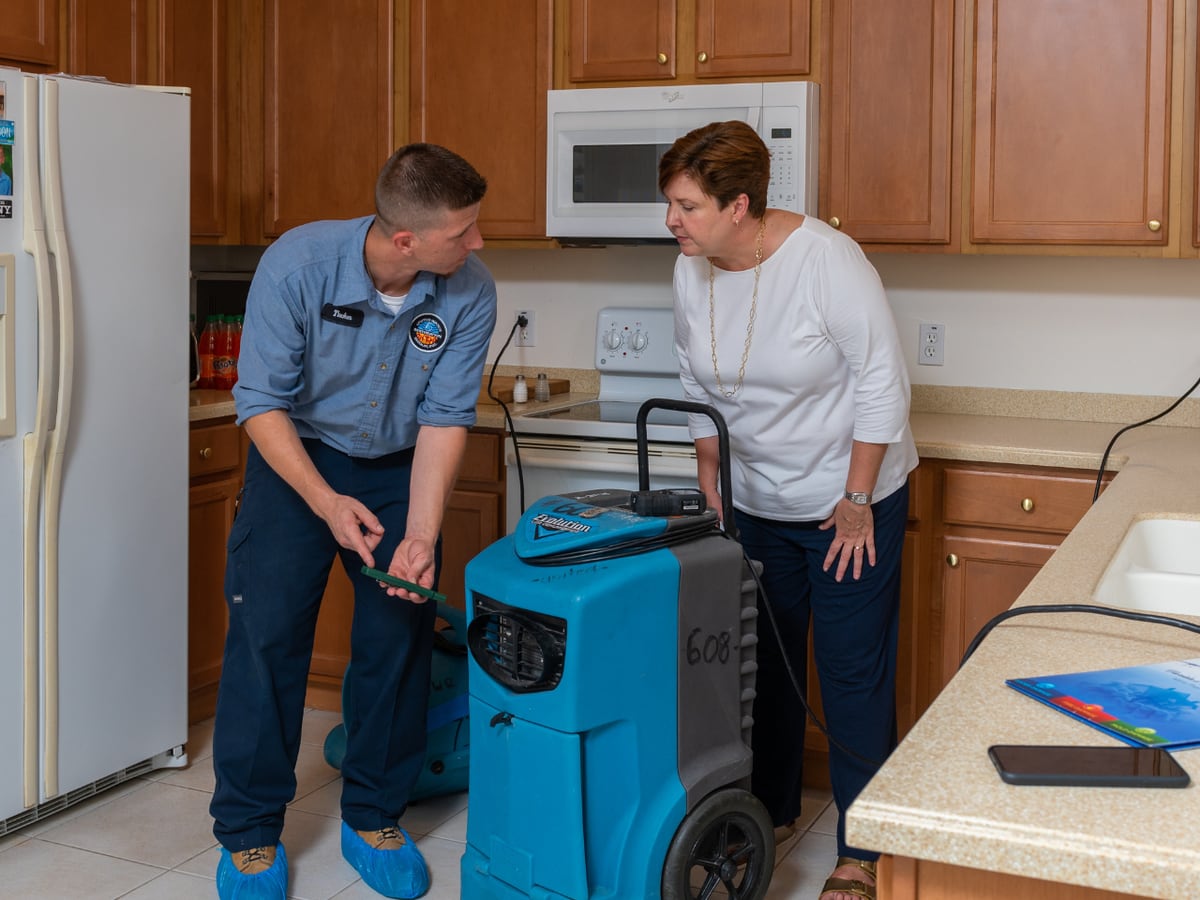
At United Water Restoration Group of Austin, we understand the unique mold challenges faced by local residents. Whether it's mold in your ceiling cavity or unexpected growth due to a slow leak, we have the expertise to restore your home to safety. Preventing mold not only protects your property but also ensures a healthier living environment. Call us now at (512) 772-2458 to schedule an assessment and take the first step towards a mold-free home.
Do you handle mold removal, or do I need a separate mold company?
Mold remediation is part of the same water-damage trade, and it is work this office performs. IICRC S520, the mold standard, defines the job as returning a space to what it calls Condition 1 — normal fungal ecology — by containing the area, removing contaminated porous material, HEPA-cleaning what stays, and correcting the moisture source. Worth knowing: a few states treat assessment and remediation as separate trades, so the inspection may come from an independent assessor.
How much does mold removal cost, and what does a mold test cost?
Pricing follows the size and type of growth, not a flat rate. IICRC S520 scopes a job by affected area and condition, and EPA mold guidance draws a line around ten square feet — a patch under that is a different job from contaminated wall cavities or a crawl space. Testing is priced separately from removal, and whether clearance testing sits inside a quote varies by job. You get a written scope before work starts; inspection terms are confirmed on the call.
Do you test and inspect for mold, or only remove it?
Both halves exist, and they are deliberately not always the same hands. Several states regulate mold assessment and mold remediation as separate trades and bar one firm from doing both on the same property. This office inspects for moisture and visible growth; where a written protocol or clearance sampling is called for, an independent assessor supplies it. IICRC S520 grades what an inspection finds as Condition 1, 2 or 3 — settled spores and active growth are not the same finding.
How do you find mold you can't see, and is there a test afterward that proves it's gone?
Hidden growth is found the same way hidden water is: moisture meters, thermal imaging and cavity inspection, with readings compared against a dry standard elsewhere in the same building. On pre-testing, EPA guidance is blunt — when growth is visible, sampling is usually unnecessary, because the response does not change. Afterward, IICRC S520 calls for post-remediation verification: the area is inspected and, where the protocol requires it, sampled, with Condition 1 as the target. Scope varies by job.
What does mold remediation involve step by step, and do I have to move out while you work?
The sequence in IICRC S520 is containment first, then removal, then cleaning, then verification. Plastic containment with negative air pressure and HEPA filtration — HEPA media captures 99.97 percent of particles at 0.3 microns — is what keeps the cutting from seeding clean rooms. Contaminated porous material comes out, surfaces are HEPA-vacuumed and wiped, the structure is dried, and the area is checked afterward. Many households stay put; whether yours can depends on the rooms involved and who lives there.
Is it black mold, or just mildew or a water stain — can you tell the difference?
Color is not a diagnosis, and the species rarely changes the plan. CDC guidance says it is not necessary to identify what is growing, because mold found indoors should be treated the same way with respect to removal. IICRC S520 grades active growth as Condition 3 whatever the species, and works from moisture readings rather than appearance. A technician can usually tell growth from old staining on site; naming a species means laboratory sampling through an independent assessor.
After the mold is removed, do you rebuild the drywall and flooring, or do I need a contractor?
Remediation ends at a clean, dry, verified cavity; putting the room back is reconstruction, and it is work this office also performs, quoted as its own scope. The split is deliberate — IICRC S520 treats verification as the gate, so drywall, insulation and flooring go back only after the area reaches Condition 1 and the moisture source is corrected. How much rebuild a job needs depends on how much material had to come out, which is not known until containment is open.
Will the mold come back after it is removed?
Regrowth tracks the water, not the cleaning. EPA guidance is explicit that mold spores are present indoors everywhere, so what gets controlled is dampness rather than spores — keeping indoor relative humidity under 60 percent, correcting the leak or ground moisture, and adding a vapor barrier or dehumidification where a crawl space needs it. Growth that comes back in the same spot almost always means the source was never found. Conditions differ house to house.
Do you remove mold in a crawl space or attic, and can mold under the house reach the living space?
Unfinished space is in scope, and it is often where growth starts. Air moves upward through a floor system, so a damp crawl space feeds the rooms above it, and EPA guidance treats the structure as one moisture envelope rather than separate boxes. Attics usually trace to a roof leak or a bath fan venting into the space. The work follows IICRC S520: contain, remove contaminated material, HEPA-clean, then hold humidity under 60 percent with a vapor barrier or ventilation as the structure requires.
Can I clean mold myself with bleach or a store-bought spray?
Small jobs, sometimes. EPA guidance puts the self-help line at about ten square feet of growth and says bleach is not recommended as routine practice — it lightens the surface while the material underneath stays wet and contaminated. Spraying or painting over growth before an inspection is worse than leaving it, since it hides the extent without removing it. Porous material that soaked through gets removed rather than cleaned, which is where IICRC S520 draws its own line.
Will you find and fix the leak that caused the mold, and which has to happen first?
Order matters: the water source gets corrected first, or the remediation is temporary. EPA mold guidance and IICRC S520 both treat moisture control as the precondition — the same guidance that puts the mold-growth window at 24 to 48 hours of wetness. A technician traces the source with moisture mapping and thermal imaging: plumbing, roof flashing, HVAC condensate, grading. Some repairs sit inside the restoration scope and some belong to a plumber or roofer, depending on what the inspection finds.
Is mold in my house dangerous to my health?
This one takes attribution rather than reassurance. The CDC and EPA describe damp indoor spaces as associated with coughing, wheezing and upper-respiratory symptoms, and with worsening asthma in people who already have it, and they treat people with weakened immune systems or chronic lung conditions as more sensitive. EPA guidance pairs that with a dampness target: indoor relative humidity under 60 percent. Whether mold explains a specific symptom is a question for a physician.
If there's mold in the air vents, do you clean the HVAC system and ducts too?
Where growth shows up in the vents, the system is inspected as part of the mold work, though whether the cleaning falls to this office or an HVAC contractor depends on the system. EPA guidance on air ducts holds that cleaning a system with mold growing in it will not hold unless the moisture feeding it is corrected first. Running the blower meanwhile moves particles room to room. Duct cleaning follows NADCA's ACR standard, using HEPA-filtered collection rated to 99.97 percent at 0.3 microns.
If I already have a mold report and remediation protocol, can you quote from it?
A written protocol is the right thing to send; it usually carries enough to build a scope from, because it already states the affected areas, the containment required and the clearance criterion — normally Condition 1 under IICRC S520. That standard expects remediation to follow the assessor's protocol rather than reinvent it. A site visit is often still needed to measure and check access, depending on how detailed the protocol is. Say on the call that you hold one.
If a home inspection finds mold on a house I'm buying, what should I do before closing?
Get the moisture source identified before anyone argues about the growth, because that decides whether this is a cosmetic line item or a structural repair. A written scope from a remediator is what a seller concession or repair request gets negotiated against. EPA guidance puts the self-help threshold at about ten square feet; past that, it is remediation work, and IICRC S520 sets how it is verified. Timelines depend on access, scope and the closing date you are working to.
Does homeowners insurance cover mold removal?
Two things usually decide it. The mold has to follow a covered cause of loss — a sudden pipe failure generally qualifies, long-term seepage and humidity generally do not, and EPA guidance that material dried in the first 24 to 48 hours usually will not grow mold is part of why timing gets scrutinized. Most policies also carry a separate, much smaller mold limit, which is why an approved claim can pay less than the bid. Read your own wording and ask your adjuster.